
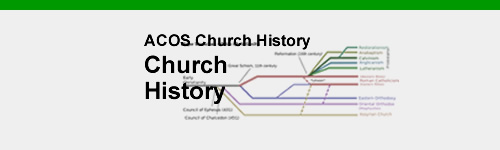
This overview of church history will help you place our United Methodist history in the larger context of the church. Wesley's reading of the ancient church sources shaped him profoundly. They can do the same for us. Sir Isaac Newton once observed, "if I have seen further [than others], it is by standing on the shoulders of giants.” It is my hope that this class will expand our vision and therefore make us better servants of our Lord, Jesus Christ.
- Facilitator: Phil Jamieson

On the other side of the pandemic, we face old questions in a new era for mission and ministry: How do we understand/define the Church and what is its purpose? Given new vision of the systemic racism and economic inequities in our communities and in our congregations, what constitutes a faithful Christian witness? How do we preach the gospel and form Christian discipleship capable to the task of ministry now? And most important, how do we discern and participate in the active work of God’s Spirit in the world?
In this course, we will draw from Wesleyan and Methodist theological tradition to renew the work of “social holiness,” a term that describes both the Church’s ways of evangelism and discipleship formation, and the Church’s witness to and engagement with the world. For students, pastors, and congregations seeking to embrace in new ways the Wesleyan call to Social Holiness, this course will provide resources to strengthen the work of evangelism and outreach, ministry and mission.
- Facilitator: Jeff Conklin-Miller

Ancient interpreters have their own distinctive ways of reading scripture. What can we learn from entering their world and seeing the Bible through their eyes? In this course, students will explore a variety of ancient biblical interpretation, both Jewish and Christian, gain familiarity with the principles of interpretation that lead to divergent readings, and ask critical questions about what makes a reading "faithful" or "good."
Online meetings:
- Optional, but highly recommended: May 4, 2026, 4pm ET for an introduction to the course
- Required: June 25, 2026, 12:30-3:30pm ET for class presentations
- Facilitator: Phil Jamieson

This course will cover over three hundred years of historical developments that contribute to the formation of The United Methodist Church. Special emphasis will be given to the formation of the Wesleyan heritage in the eighteenth century, the adaptation of that tradition to the American scene during the Revolutionary period, and the forces that have shaped Methodism through the last three centuries.
- Facilitator: Phil Jamieson

This course introduces biblical interpretation. Attention is given to the inspiration, formation, and function of the canon and to the development of a methodology of interpretation consistent with the nature of scripture. The importance of the Bible as a witness to the life and faith of ancient Israel and earliest Christianity will be emphasized.
Students will be able to:
- Articulate the place of scripture in the life of the congregation and the role of the pastor in interpretation.
- Understand the inspiration and formation of the canon and its authority within the community of faith.
- Understand and apply historical, literary, and theological approaches to various types of literature in scripture using Genesis, Hosea and Amos, Mark, and Philippians.
- Develop a method of exegesis consistent with the nature and authority of the Bible.
- Facilitator: Chris Haynes

This course introduces the student to theological reflection in the Wesleyan tradition. Basic terms, tasks, and methods of Christian theology will be introduced. Representative classical themes will be defined and illustrated. The course provides a foundation for further historical and theological study.
Students will be able to:
- Examine their understanding of faith, sin, salvation, grace, and the place of doctrine in the life of the Church.
- Use and understand classical theological terms and themes.
- Critically consider the sources of theological reflection, including scripture, tradition, experience and reason.
- Reflect theologically as a resource for pastoral ministry.
- Instructor: Brian Germano

This course grounds the student in the theology and core practices of personal and congregational formation and discipleship.
Students will be able to:
- Articulate a theological basis for the Wesleyan emphasis on spiritual disciplines and practice them as means of grace.
- Explain and implement the General Rules and the practices of small groups in a congregation.
- Educate and resource a congregation in the disciplines Christian formation.
- Organize congregations to help people discern their callings and gifts for ministry
Zoom meeting: Optional Zoom meeting for live feedback on July 8, 2026; 6-7pm EDT.
- Facilitator: Robert Winstead

This course forms the student’s identity as pastoral leader and change agent in congregations, The United Methodist Church, and the world.
Students will be able to:
- Identify and understand the attributes of good leaders, biblically and theologically.
- Evaluate and strengthen their own identities and skills as pastoral leaders.
- Explain and reflect on the nature of change in the local congregation and wider society.
- Implement visioning, strategizing, and planning processes in their local congregations.
Zoom meeting: Optional Zoom meeting for live feedback on July 8, 2026; 7-8pm EDT.
- Facilitator: Robert Winstead

This course interprets the critical events, developing institutions, and traditions of Israel. Attention is given to the earliest Covenants, to the Exodus, to the rise of the monarchy, and to other events up to the eighth century prophets.
Students will be able to:
- Articulate a historical overview of the experience and faith of ancient Israel.
- Exegete selected passages that illustrate crucial turning points in the history of Israel.
- Apply exegesis to preaching, other pastoral responsibilities, and issues of the present day.
Online meeting: Optional, but highly recommended, Zoom meeting on June 8, 2026; 7:30-9pm EDT.
- Instructor: Russell Sisson

This course focuses on developing the student’s competency as an administrator in a United Methodist congregation.
Students will be able to:
- Articulate a biblical and theological understanding of polity.
- Understand and explain the polity of The United Methodist Church, including conferencing, oversight, and discipline.
- Articulate the nature of stewardship biblically and theologically.
- Identify techniques and develop skills as effective administrators of local churches, including financial management.
- Facilitator: Phil Jamieson

This course focuses on the content and message of the Gospels, as well as the theological perspectives of the Gospel writers. The practice of exegesis will be emphasized.
Students will be able to:
- Understand the origin, message, and purpose of each Gospel.
- Exegete this form of literature.
- Apply exegesis to preaching, other pastoral responsibilities, and issues of the present day.
Online meeting: Optional, but highly recommended, Zoom meeting on June 1, 2026; 7:30-9pm EDT.
- Instructor: Russell Sisson

This course focuses on preaching the gospel from the Old and New Testaments.
Students will be able to:
- Articulate a theology of proclamation.
- Exegete a variety of biblical passages for preaching.
- Evaluate sermons for biblical integrity, theological soundness, internal logic, and delivery, and appropriate insights gained from the evaluation of their own sermons.
- Develop plans for ordering and delivering sermons in their congregational and communal context.
Required online meetings in Weeks 6-10.
Students are required to participate in each Zoom session. Please plan your schedule accordingly.
- June 9, 2026; 10am-12pm EDT
- June 16, 2026; 10am-12pm EDT
- June 23, 2026; 10am-12pm EDT
- June 24, 2026; 10am-12pm EDT
- June 30, 2026; 10am-12pm EDT
- July 1, 2026; 10am-12pm EDT
- July 7, 2026; 10am-12pm EDT
- Facilitator: Robert Brown

This course covers the significant individuals, decisive events, and theology of the Methodist movement. Utilizing categories of grace, faith, and holiness, the student will appropriate the Wesleyan heritage.
Students will be able to:
- Understand and reflect on the movements, major figures, and events that led to the eighteenth century revivals, especially the lives and ministries of John and Charles Wesley.
- Understand and articulate the vision of holiness and the theology of grace as it shaped the Wesleys, and the structures of the Methodist movement.
- Identify and discuss significant theological and historical developments in American Methodism, including ordination and episcopacy.
- Reflect theologically on their Wesleyan heritage and identity.
- Instructor: Brian Germano

Este curso apresenta os fundamentos bíblicos e teológicos para o comportamento cristão, enfatizando as habilidades pastorais necessárias para a liderança moral na congregação e na comunidade.
Ao final do curso, os alunos serão capazes de:
- Articular uma base bíblica e teológica para o pensamento ético e o comportamento moral, e distinguir as principais abordagens ao raciocínio ético.
- Compreender a relação entre suas histórias pessoais, vocação pastoral, contextos locais e responsabilidade como líderes morais.
- Desenvolver uma estrutura cristã para o raciocínio e a ação moral, e aplicá-la ao uso do poder e ao estabelecimento de limites no ministério.
- Demonstrar familiaridade com os Princípios Sociais da Igreja Metodista Unida e utilizá-los como recurso para a reflexão e a ação ética.
Reuniões via Zoom: Segundas-feiras, de 4 de maio a 6 de julho, das 19h às 20h30 (horário da costa leste dos EUA)
- Facilitator: Filipe Maia